An essential part of rebuildable gear, coils are often replaced too late, which degrades the vaping experience. Loss of flavor, burnt taste and the risk of damaging your equipment: let's see why it is crucial to change them in time.
How do coils work technically?
Coils are made with resistive wire (made from different materials: Kanthal, Ni80 or SS316L) and cotton. When the box mod or mod is fired, the coils heat up and vaporize the liquid, turning it into the vapor you inhale.
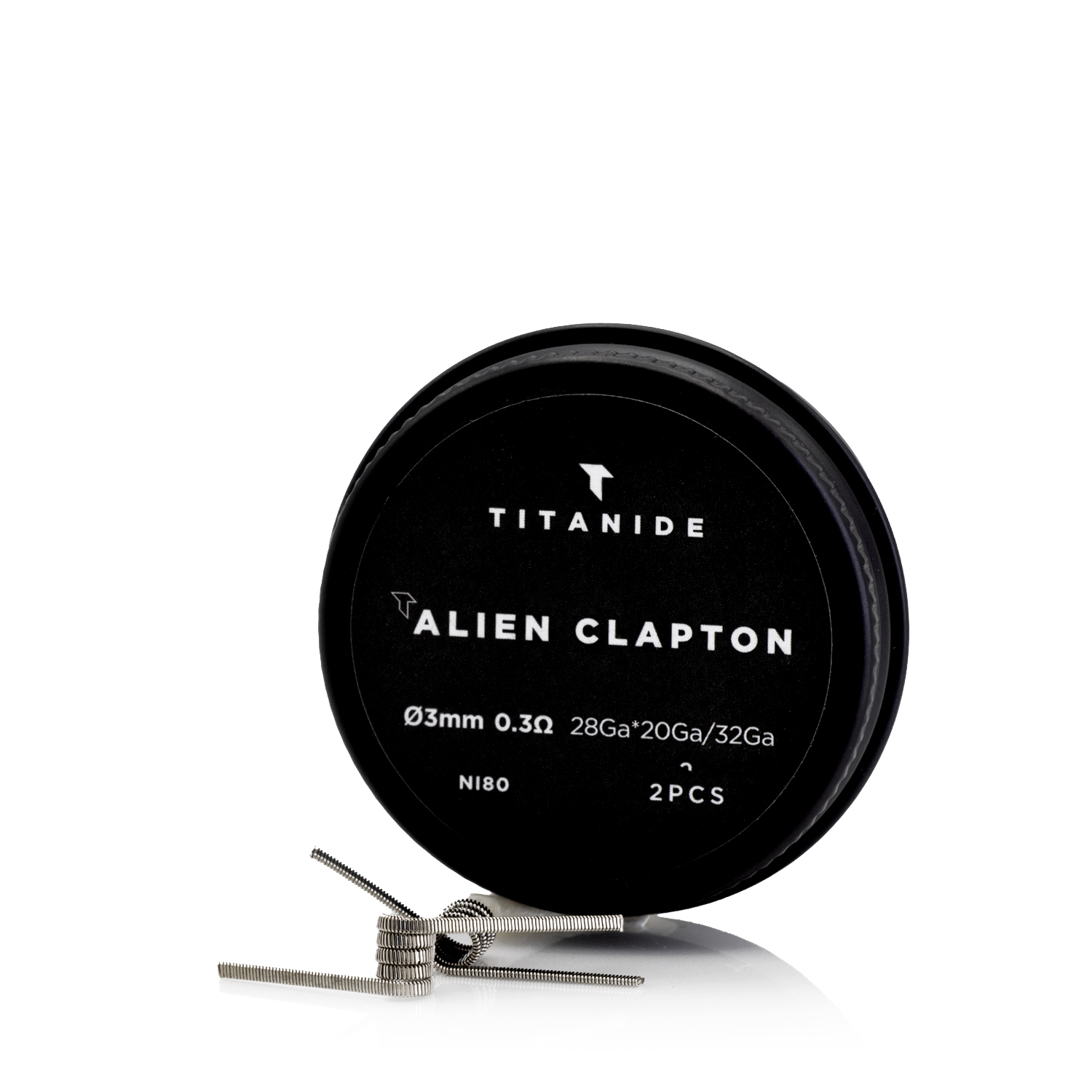
"Complex" coils (clapton, fused clapton and alien) are designed for sub-ohm vaping. When the coil's value is above 1 ohm, vapor production will be lower with a tighter, MTL-type draw.
Why change your coils regularly?
To fully enjoy flavorful vaping without the risk of a burnt aftertaste, it is important to watch the liquid level in your tank to avoid dry hits, and also to prevent your coils from aging by changing them in time.
Case 1:
If your coils are new and you feel this sensation, either there is not enough liquid in your tank, or you did not let the cotton soak up enough liquid when swapping the old coils for the new ones.
Method check:
If you are running low on liquid, add some to your tank and vape.
After a dry hit, change the cotton in your coil, and the coil itself if necessary.
If you use a dripper, soak the cotton well before use.
Case 2:
Your coils are worn out, but you keep using them. This will reduce flavor and vapor and lead to a burnt taste. Cotton and wire do not last forever; they are consumables with a limited lifespan.
A few important things to keep in mind:
The more sucralose an e-liquid contains, the more the coils gunk up.
An e-liquid rich in sucralose burns as it vaporizes, leaving residues that clog the coil and the cotton. Fuu e-liquids are guaranteed sucralose-free, which extends coil life.
These factors apply to both ready-made coils and rebuildable coils. If you are a rebuildable enthusiast, here are a few more things to consider:
Dry hit: Soak the cotton properly with e-liquid to prevent the coils from heating dry, which could damage the wire and the cotton
Poor-quality resistive wire: Coils made with poor-quality wire, such as an unstable alloy or one containing impurities, oxidize or break more easily. For optimal quality, we recommend Titanide coils, designed in France with exemplary know-how.
Low-quality cotton: Choose good-quality cotton, such as Cotton Bacon, to better withstand high temperatures, extend coil life and ensure optimal flavor rendering.
Uneven spacing: Align the wraps of the coils properly and avoid having them too close together to prevent hot spots, uneven heating and premature deterioration
Incorrect securing: Tighten the coil screws properly to avoid contact variations, poor electrical conduction and arcing.
Residue buildup: Clean your coils regularly to avoid buildup of liquid or burn deposits, which reduces performance and alters taste.
No break-in: Break in the coils before first use by heating gently to stabilize the wraps and burn off impurities, to preserve their lifespan.
Deformation: Handling coils with unsuitable tools or too much force can deform the wraps.
A few pointers to help you know when to change your coils
Based on your ohm level:
Low-resistance coils (sub-ohm, < 1.0 ohm): every 5 to 10 days for heavy vapers, or every 1 to 2 weeks for moderate users.
Medium-resistance coils (between 1.0 and 1.5 ohm): every 10 to 14 days on average, depending on how often you vape and the type of e-liquid.
Based on how often you vape:
Occasional vapers (a few puffs a day): coils can last 2 to 3 weeks with a lightly sweetened e-liquid and a well-chosen power setting.
Regular vapers (moderate daily use): change coils every 1 to 2 weeks depending on the e-liquid's composition (sweet or high-VG e-liquids gunk up faster).
Heavy vapers (frequent and prolonged use): coils may need changing every 3 to 7 days, especially at high power and with sweet e-liquids.
Changing your coils regularly is essential for a vaping experience that is optimal, flavorful and free of burnt taste. Factors such as material quality, frequency of use and the type of e-liquid affect their durability. By adopting good practices, you protect your gear and improve your vaping comfort.