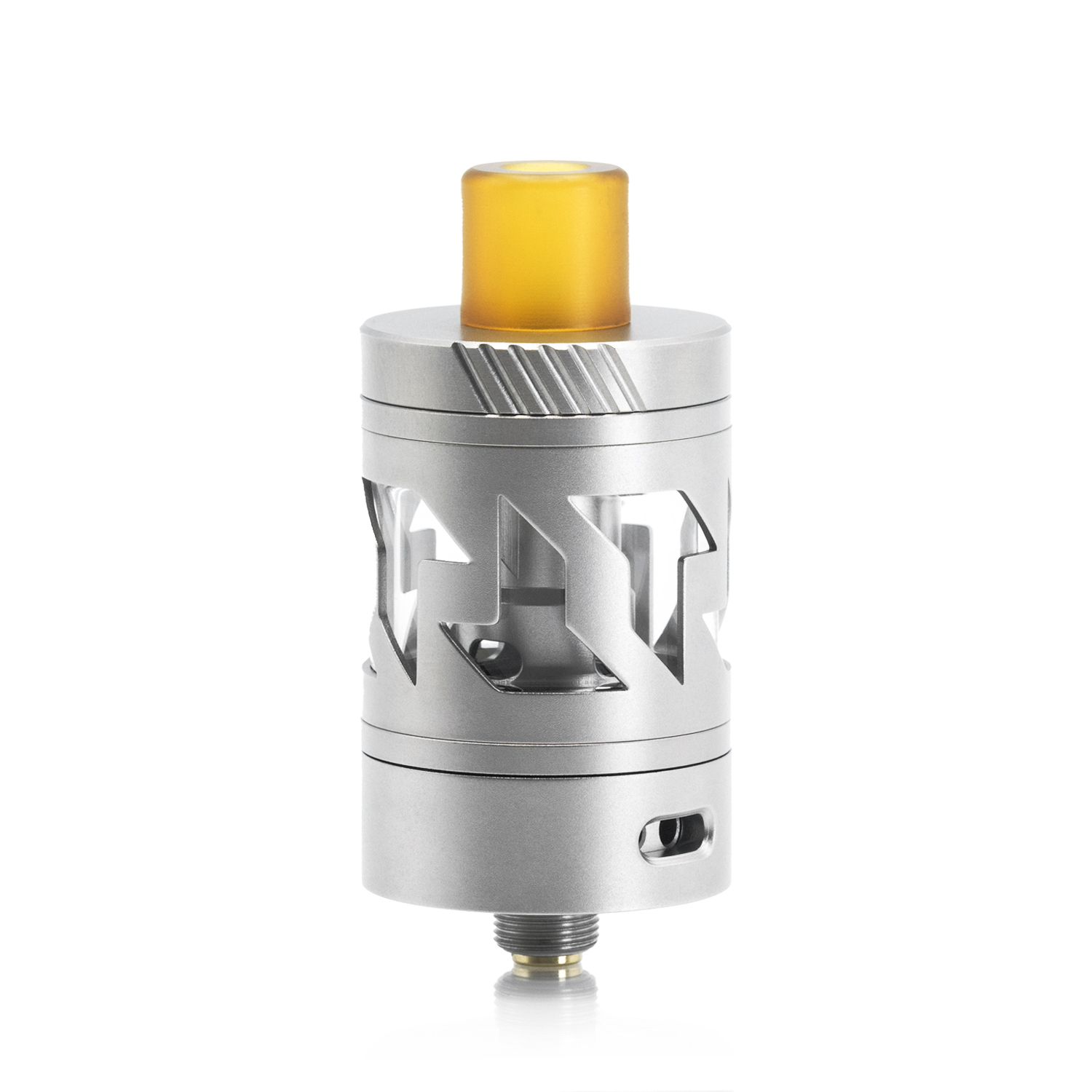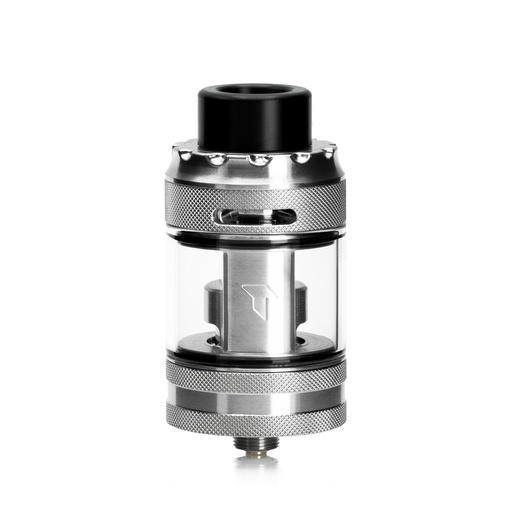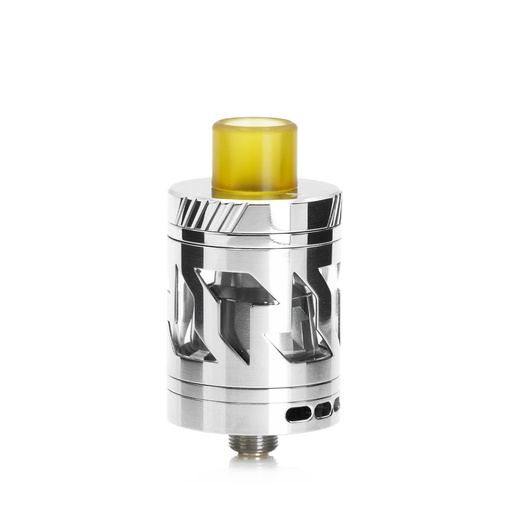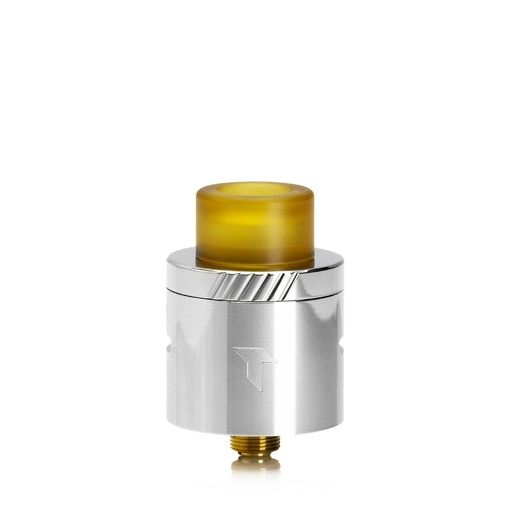
A clearomizer and a rebuildable atomizer do the same job: they bring liquid to a heated coil. The difference lies in the part you replace. With a clearomizer, the complete coil arrives ready to install. With an RTA or an RDA, you install the coil and the cotton yourself.
The right choice depends less on how long you have been vaping than on the time you want to spend on building. Some experienced vapers prefer the consistency of a ready-to-use coil. Others like to fine-tune their coil and cotton. Neither system is a mandatory step.
How does a clearomizer work?
The clearomizer contains a tank, a replaceable coil, an air inlet and a drip tip. When the cotton is worn out, you remove the complete coil and fit a new one. The manufacturer states the compatible values and their usage range.
This solution reduces the number of tools and settings. You still need to choose the right coil, prime it, respect the assembly direction and watch the seals. A coil that is not properly soaked can taste burnt from the first puffs.
The Apogée 24 offers an MTL or RDL draw depending on the coil and the drip tip. The Titan clearomizer uses a 0.4 Ω Mesh coil for a DL draw. The Clearomizers category brings these uses together without mixing them up.
What does an RTA change day to day?
RTA stands for "Rebuildable Tank Atomizer". It has a tank like a clearomizer, but its deck takes a coil and a cotton wick prepared by the user. The liquid wicks up to the cotton from the tank.
You can choose the coil value within the range the atomizer allows, adjust the amount of cotton and redo only the wick when it is gunked up. This freedom requires measurements. After each build, check the resistance on a suitable device and make sure it does not vary when you tighten or reinstall the dome.
The Leto RTA 20.24 has a single-coil deck. The spring-loaded posts make it easier to hold the wire and the guides give a reference for the cotton. Placement still matters: too much cotton slows the feed; too little can let liquid through.
When should you choose an RDA?
RDA stands for "Rebuildable Dripping Atomizer". It does not have the conventional tank of an RTA. You feed the cotton with liquid directly, or use bottom feeding when the model and the mod allow it.
The RDA gives quick access to the build. It is handy for switching liquids or checking the condition of the coil. In return, it needs more frequent liquid top-ups and constant attention to the cotton. Firing it when the wick is dry immediately produces an unpleasant burnt taste.
The Leto RDA 24 belongs to this family. Before any use, check the type of connection fitted, the coil, the cotton and the measured value. An RDA is not automatically meant for high power: the build and the air inlet determine how it behaves.
Compare the routines rather than the labels
| Practical point | Clearomizer | RTA | RDA |
|---|---|---|---|
| Part replaced | Complete coil | Cotton, then coil if needed | Cotton, then coil if needed |
| Liquid reserve | Yes | Yes | Small well or dedicated feed |
| Tools | Few | Pliers, screwdriver, measuring tool | Pliers, screwdriver, measuring tool |
| Build adjustment | Values set by the manufacturer | Coil and cotton to prepare | Coil and cotton to prepare |
| Attention required | Filling and coil | Filling, cotton and coil | Frequent feeding, cotton and coil |
If you want to fill and go, the clearomizer is often the most direct choice. If you want to learn building while keeping a tank, look at the RTA. If immediate access to the coil matters more than liquid capacity, the RDA makes sense.
How do you avoid leaks and burnt tastes?
On a clearomizer, check that the coil is properly seated or screwed in, depending on the model. Close the airflow during filling if the manual says so. Wipe the seal seats and do not tighten the tank with a tool.
On an RTA, fluff the cotton only if the build requires it. Its ends must reach the liquid inlets without being packed in. A wick that is too compact feeds poorly; a wick that is too light no longer holds the liquid.
On an RDA, soak the cotton before the first try and watch its appearance. Whatever the system, a dry taste, a sudden leak or an unstable resistance value means you must stop and check the build.
Which model needs the least maintenance?
The clearomizer requires the least personal building, but it still has to be cleaned and its seals inspected. The RTA avoids replacing a complete head with each maintenance, at the cost of precise wicking. The RDA comes apart quickly, but it asks more of your attention during the day.
The availability of consumables also matters. Look at the coils and parts offered before choosing the atomizer. Durable equipment is equipment you can keep maintaining with identified components.
Frequently asked questions
Does an RTA always give more flavor than a clearomizer?
No. The result depends on the coil, the cotton, the airflow, the power and the liquid. A ready-to-use coil used well can be more consistent than a poorly adjusted build.
Can you start with a rebuildable?
Yes, with guidance and a measuring device, but it is not necessary. A clearomizer lets you learn filling and draw with fewer variables.
Does an RDA necessarily leak during transport?
It can leak if it is overfilled or laid on its side. Empty the excess, lock the equipment and carry it upright in suitable protection.