A battery is chosen first for a specific device. The format must fit its compartment, the chemistry must match its manual, and the continuous discharge current must cover the intended use. Capacity comes next. A high number of milliamp-hours does not make a battery compatible with a mod.
At the workshop, we keep these checks separate. They let you compare two references without confusing runtime, dimensions and the ability to deliver current. Keep the mod manual and the battery datasheet within reach.
What do the numbers 18350, 18500, 18650 and 21700 mean?
These designations give nominal dimensions for cylindrical cells. The first two digits are the diameter in millimeters; the next two give an approximate length. The final zero stands for the cylindrical format.
| Format | Nominal diameter | Nominal length | What to check |
|---|---|---|---|
| 18350 | 18 mm | 35 mm | Short compartment specified by the manufacturer |
| 18500 | 18 mm | 50 mm | Intermediate length explicitly allowed |
| 18650 | 18 mm | 65 mm | Compatible reference and contacts |
| 21700 | 21 mm | 70 mm | Wider and longer compartment |
This table does not replace the actual dimensions. Built-in protection or a protruding terminal can change the length. A wrap also adds thickness. The format names a family, not a guarantee that every cell in it suits every device.
Which format should you choose for your mod?
Use the format stated in the manual. Never make up for extra space with a metal part, a magnet or an improvised shim. Do not stack two short batteries to replace a longer cell. An adapter should only be used if the equipment manufacturer provides for it.
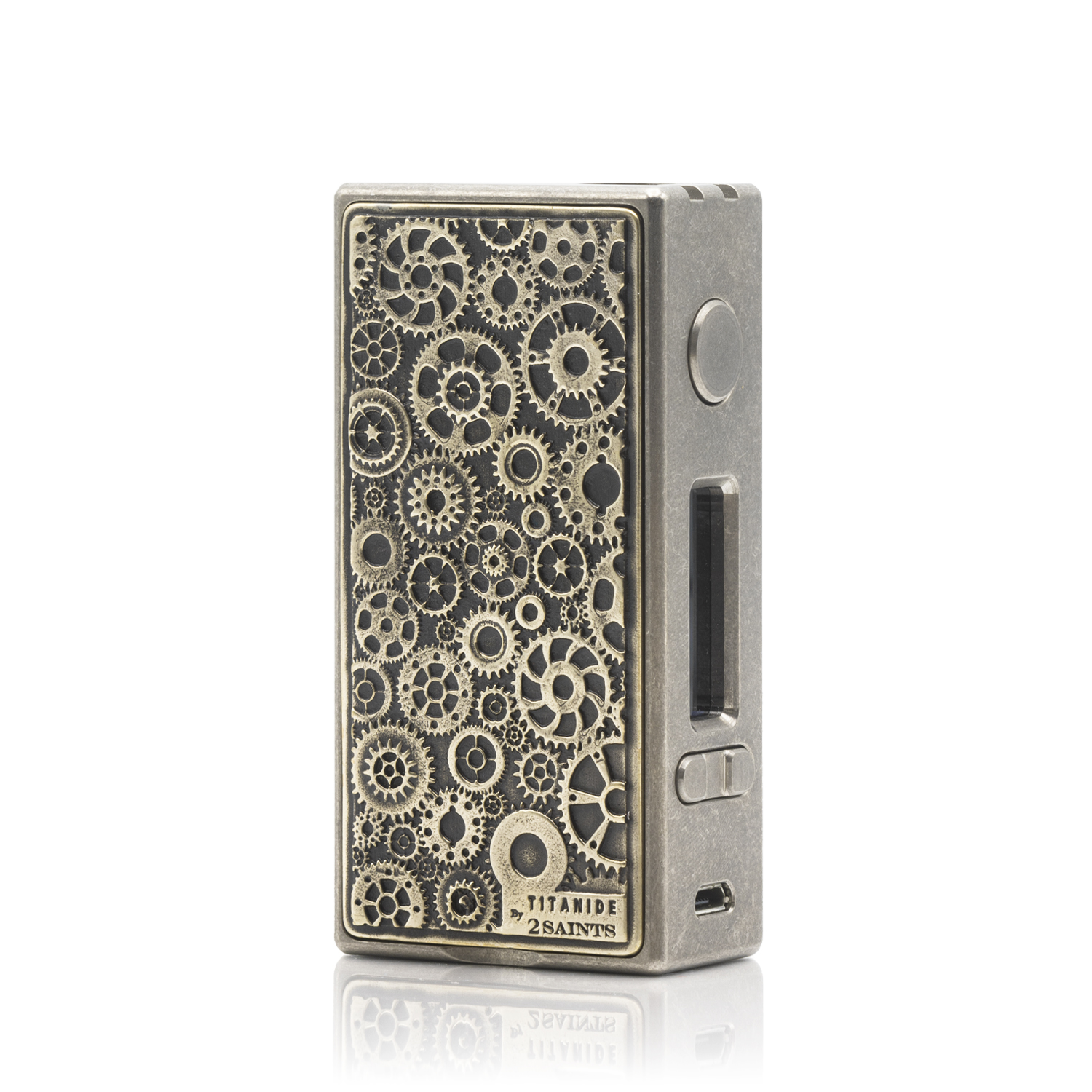
The LETO 2.1 Brushed uses an 18650 IMR battery. Its datasheet calls for at least 20 A of continuous discharge. The Box Panache Stonewashed also works with an 18650 IMR, but its electronics require you to read its own instructions. The same format does not make their needs identical.
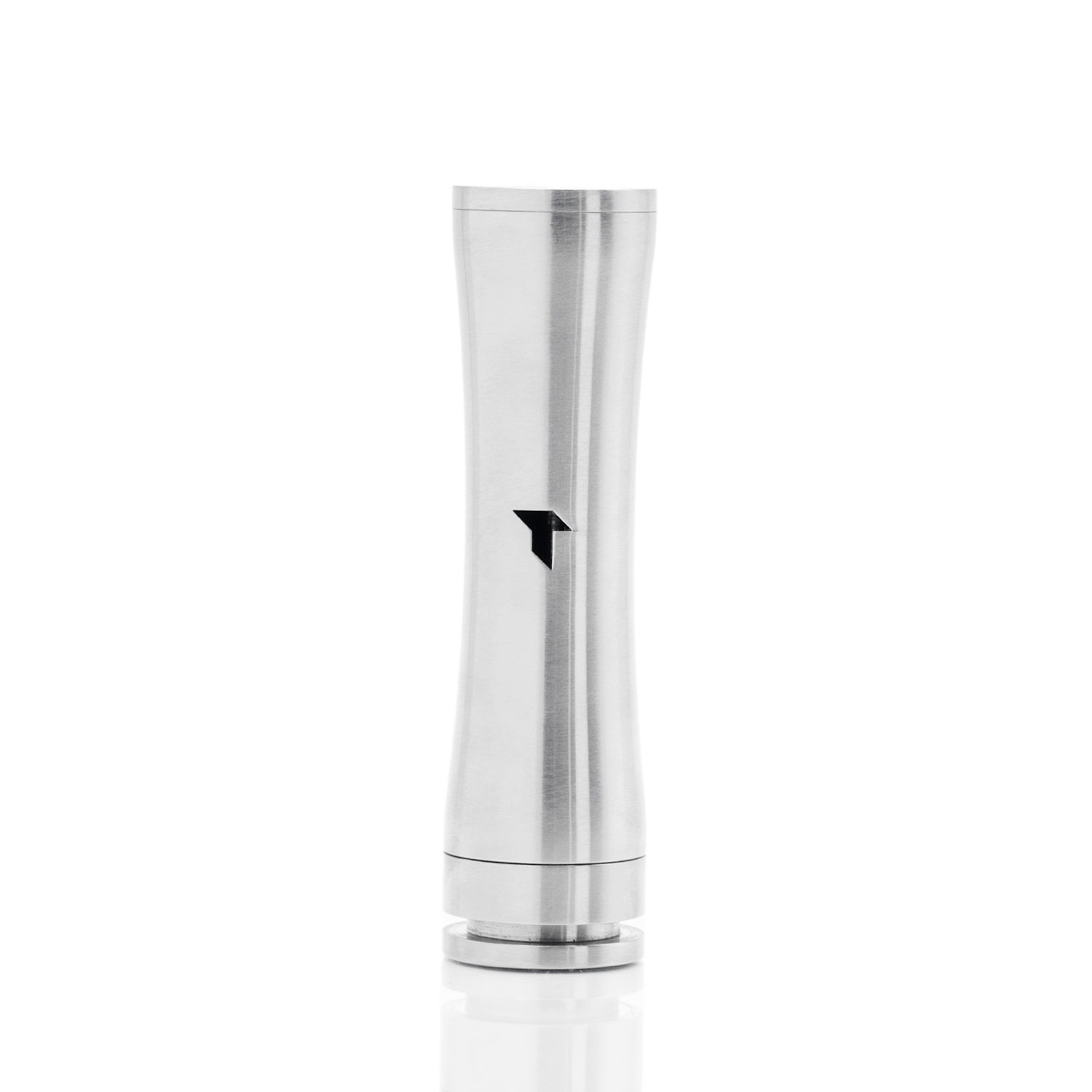
For a tube rated for 18350 or 18500, stick to that exact format. For a device that accepts several sizes, check the conditions for each configuration. The outer diameter of the mod does not tell you the diameter of the battery.
Why distinguish capacity from continuous discharge current?
Capacity, expressed in mAh, represents a quantity of electric charge measured under defined conditions. It helps compare the runtime of cells of the same voltage used under similar conditions. It does not predict a number of puffs.
Continuous discharge current, expressed in amps, describes a sustained usage limit, which also comes with conditions. Read the manufacturer's datasheet, especially its temperature limits. An advertised pulse current figure is no substitute for this value.
So compare the required current before capacity. Two batteries of the same size can offer different trade-offs. If the exact reference, origin or specifications are uncertain, do not use the battery. The color of the wrap is not a sufficient technical identifier.
How does battery choice relate to Ohm's law?
On a single-cell mechanical mod, the theoretical current in the circuit is calculated as I = U / R. With a cell specified at 4.2 V fully charged and a measured resistance of 0.30 ohm, the result is 14 A. At 0.20 ohm, it is 21 A.
These examples explain an electrical relationship; they do not validate any setup. The resulting value must stay below the battery's continuous limit with a margin, while following the mod manual. A 20 A minimum on a datasheet therefore does not automatically make a setup that calls for 21 A acceptable.
Measure the resistance after assembly and check that it is stable. The mechanical mod guide covers contacts and pre-use checks in detail. On a regulated box mod, do not apply this calculation directly to the battery current: the electronics sit between the power source and the coil.
How do you charge a battery in an external charger?
Choose a charger explicitly compatible with the cell's chemistry and format. Also check its allowed charge current: the continuous discharge current is not the charge current. Place the battery in the indicated direction, without forcing the contacts.
Charge on a stable, non-flammable surface, in a ventilated place and under supervision. Follow the charger manual and remove the battery once charging is complete. An error, a smell or abnormal heating means you must stop. Do not try to revive a damaged cell with a restart function.
What should you look at on the wrap before each use?
Inspect the whole insulating sleeve and the ring around the positive terminal. A cut, a peeling edge or an area of exposed metal is enough to suspend use and charging. Also check for dents, crushing, corrosion or leaks.
A new wrap does not repair a damaged cell. If only the sleeve seems affected, have the battery checked and its insulation replaced by a qualified person before putting it back into service. Do not hide a defect with adhesive tape.
How should you carry, store and replace your batteries?
Carry spare batteries in a suitable insulating case, with compartments that keep their terminals from touching. Never carry a bare cell in a pocket or bag that also holds keys and coins. Locking the mod complements this precaution for the assembled device.
For storage, choose a dry, temperate place away from the sun. For a long period, follow the charge level and the checks recommended by the manufacturer; do not leave a cell deeply discharged. Keep your batteries out of reach of children.
Replace a damaged cell or one that behaves unusually. A persistent drop in runtime also deserves a check. There is no universal lifespan expressed in months. Hand removed batteries over to a suitable collection point, with their contacts protected. To maintain the related equipment, see our mod maintenance guidelines.
Frequently asked questions
Can a 21700 battery replace an 18650?
Only if the manufacturer explicitly provides for this format in the device. The 21700 is wider and longer; never force its insertion or modify the compartment.
Does more mAh mean more available current?
No. Capacity and continuous discharge current are two separate characteristics. Check the required current first, then compare capacity between compatible references.
Can I keep using a battery with a small tear in the wrap?
No. Stop using and charging it until the battery and its insulation have been checked. Damage to the cell means it must be replaced, even if a new wrap could hide it.